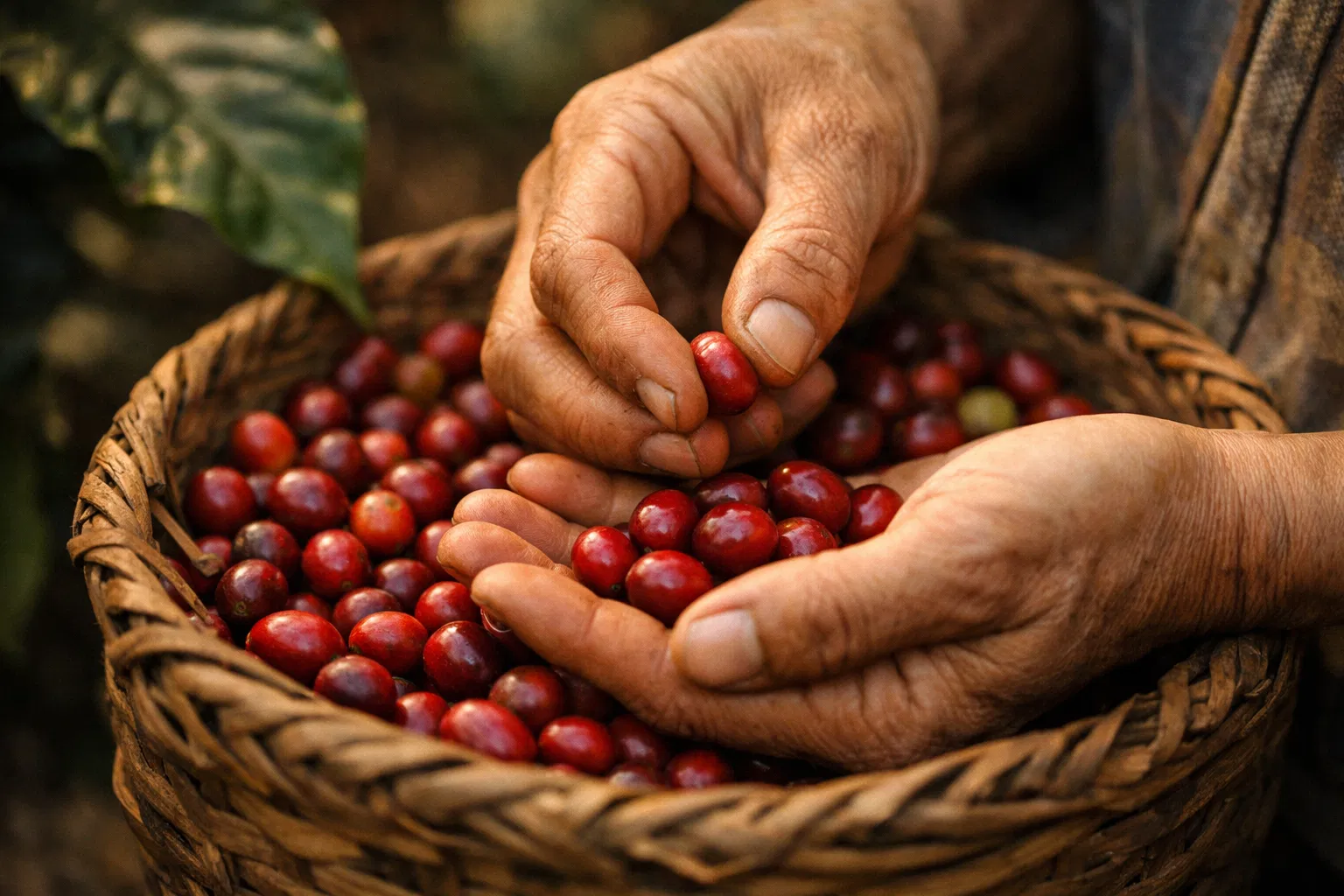
Every coffee begins somewhere.
Ours begin in Araku Valley.
The Land
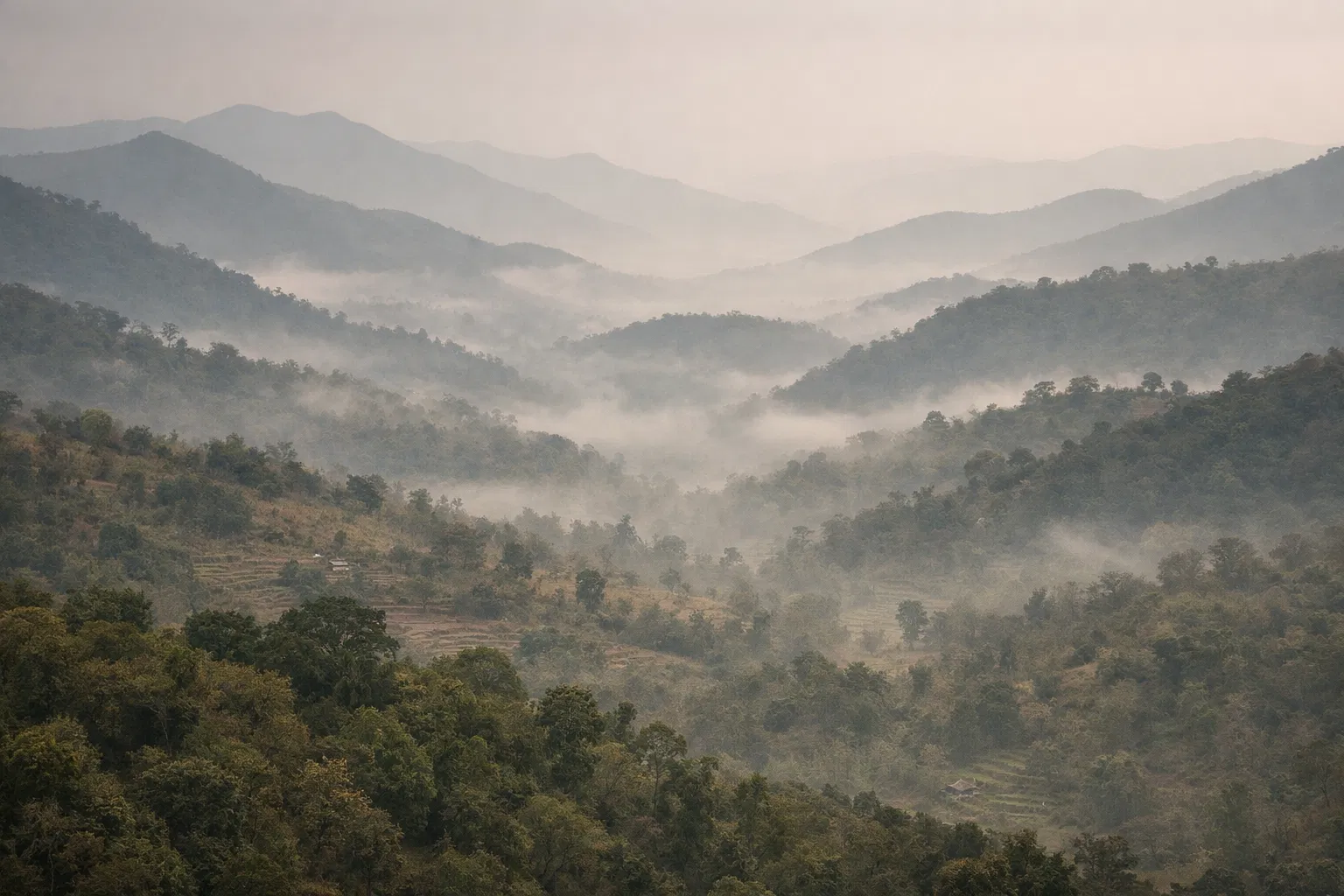
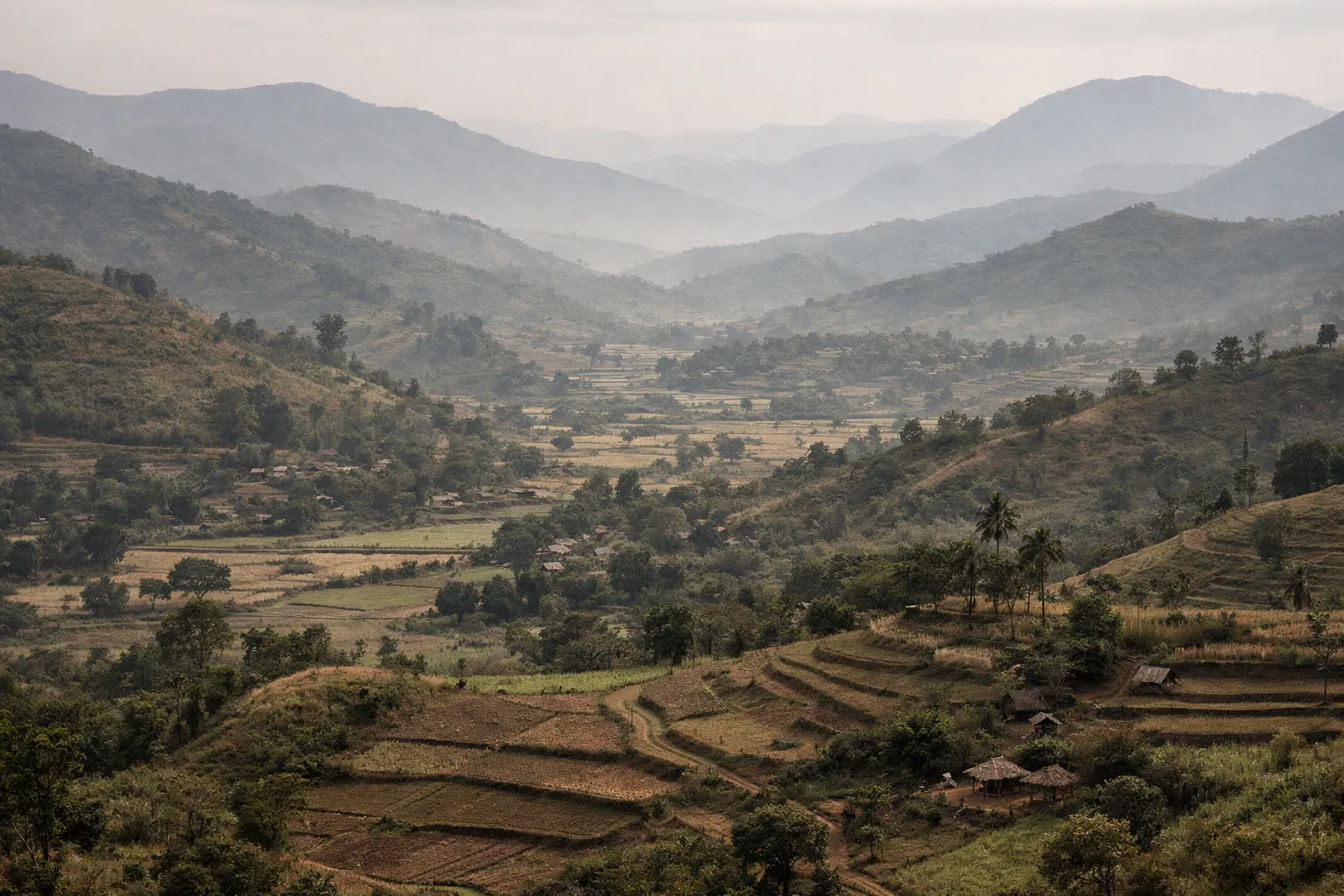
Located in the Eastern Ghats of India, Araku Valley is not defined by plantations, but by forests. Coffee grows here alongside native trees, shaped by altitude, shade, and biodiversity.
It is not engineered — it is part of the ecosystem.
The People
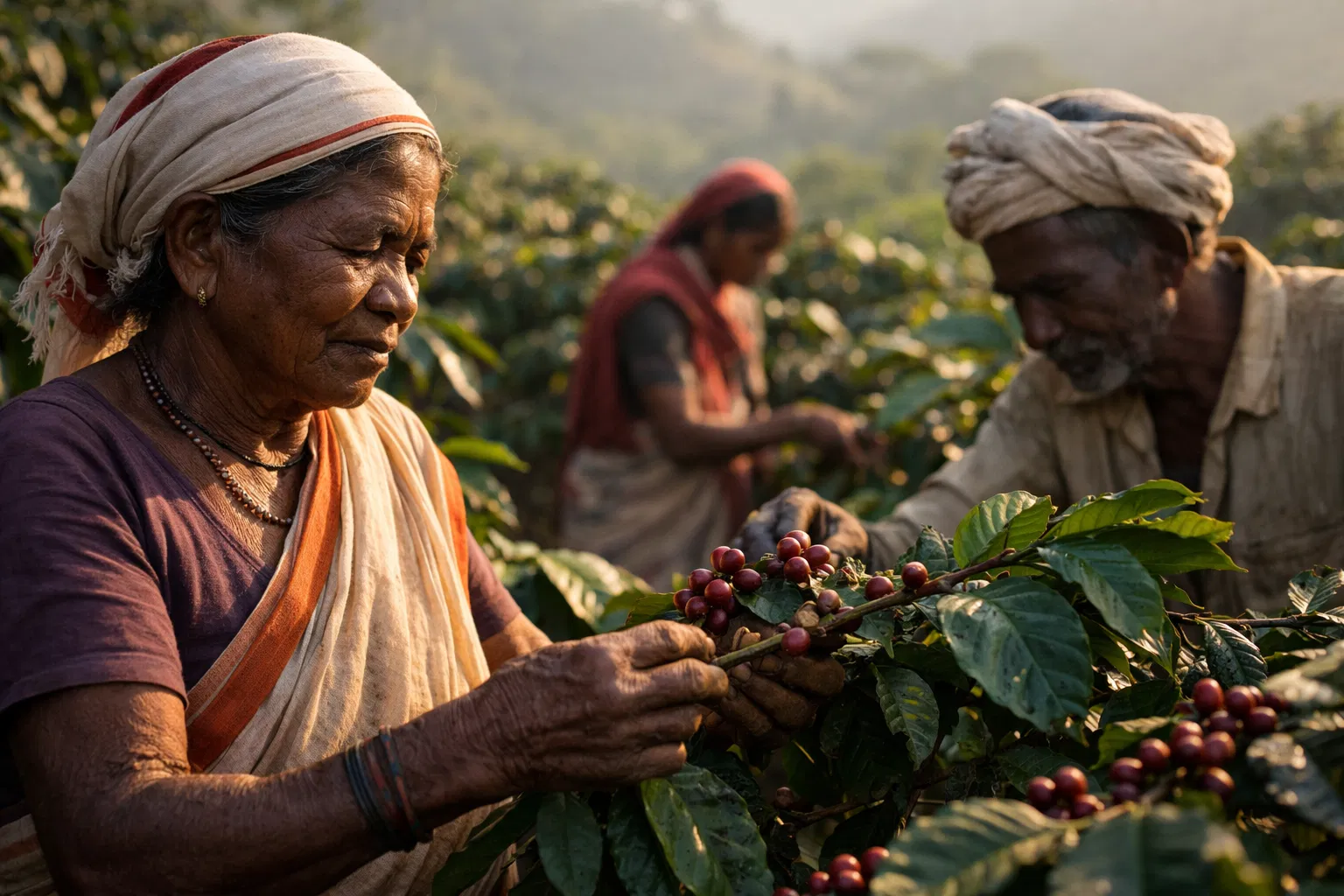
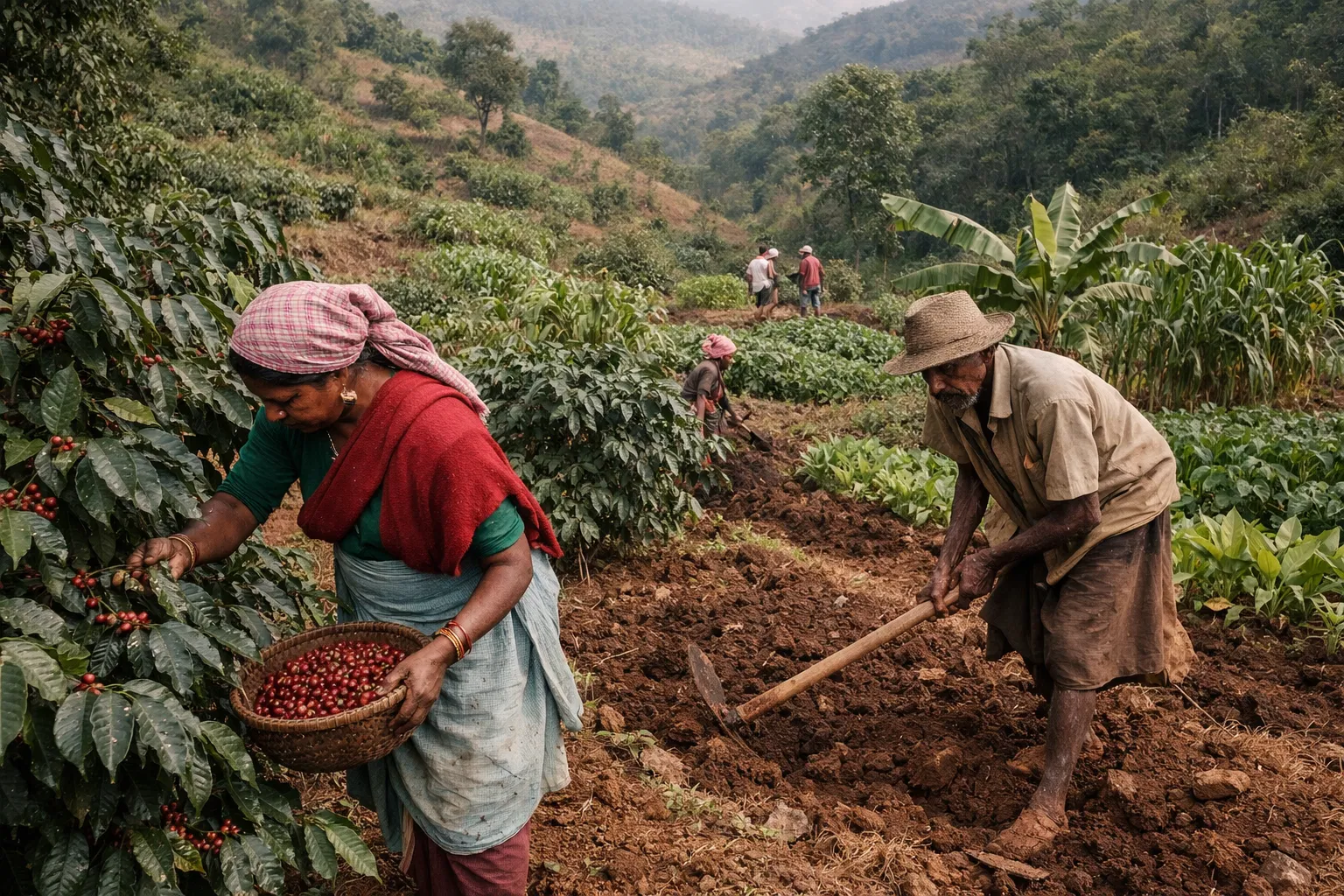
The coffee we work with is grown by indigenous communities who have lived in these regions for generations. It is not industrial. It is lived knowledge — shaped over generations.
This is where the character of the coffee begins.
Where Character is Shaped
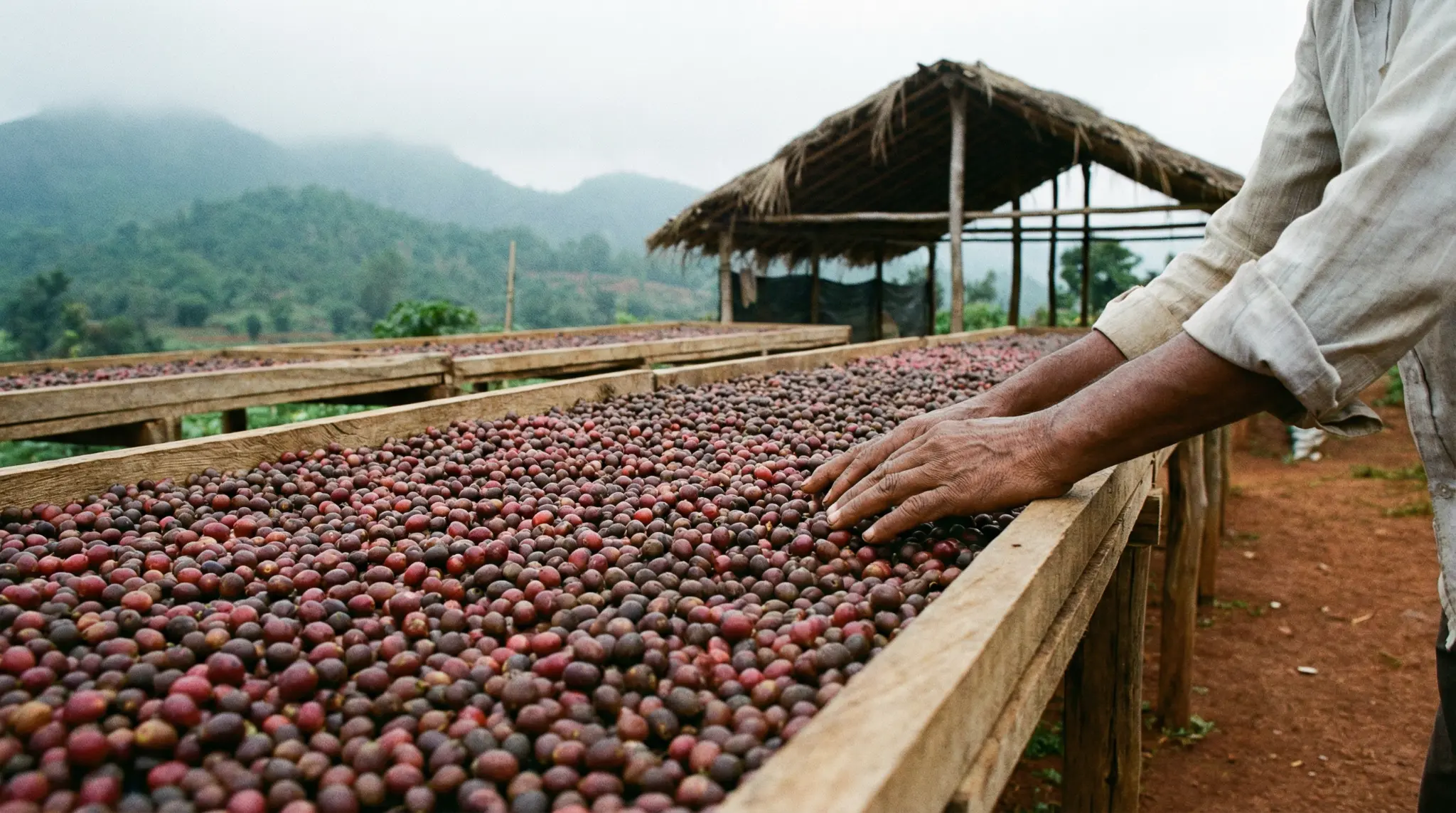
Coffee does not become what it is at harvest alone.
It is shaped in the days that follow — through how it is processed, dried, and prepared.
In Araku, this stage is still evolving.
With intention, we are moving closer to it — bringing each lot closer to how it naturally expresses itself, without taking away what makes it its own.
How Coffee Grows Here
Unlike large-scale plantations, coffee in Araku is cultivated in small plots, often alongside other crops. The process is slower. Less controlled. More dependent on nature.
But it is precisely this that gives the coffee its depth and variation.
Regions
Our coffees come from across Araku —
Araku, Ananthagiri, Dumbriguda, Hukumpeta, Pedabayalu, and Munchingput.
Each region carries its own subtle variation — in elevation, soil, and pace.
Our Role
We do not arrive at the end of the process.
We work from within it — at origin, across harvests, and through each stage that follows.
Our role is not to control what coffee becomes,
but to recognize it — and carry it forward.